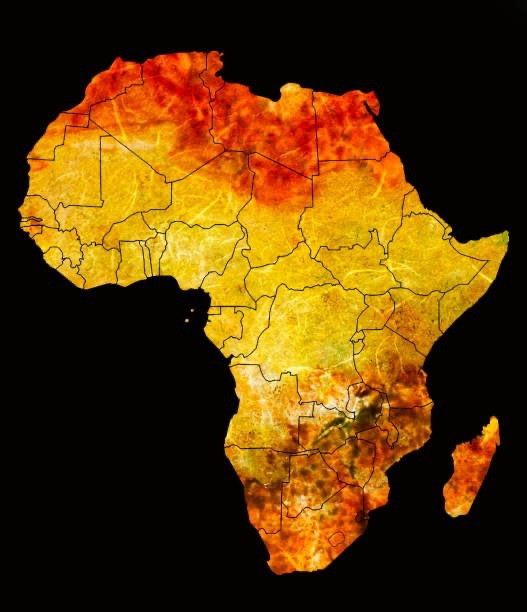
Nigeria is a country located in West Africa. Before it became one united nation, the land was occupied by many different ethnic groups and powerful kingdoms. These early societies developed their own systems of government, trade, and culture.
Some of the earliest known people in Nigeria were the Nok, who lived over two thousand years ago and were skilled in iron working and art. In the northern part of the country, great empires such as Kanem-Bornu and the Hausa city-states grew strong through trade across the Sahara Desert. In the southwest, the Oyo Empire and the Benin Kingdom became famous for their well-organized political systems and military strength. In the southeast, the Igbo people lived mainly in organized village communities.
From the 15th century, European traders arrived on the coast. Trade increased between Africans and Europeans, and later Nigeria became deeply involved in the Trans-Atlantic Slave Trade, during which millions of Africans were taken away to the Americas. This period caused great suffering and weakened many African societies.
In the 19th century, Britain gradually took control of the area. Lagos was taken over in 1861, and in 1914 the British joined the northern and southern regions together and named the new country Nigeria. The British ruled mainly through traditional rulers, a system known as indirect rule.
Nigeria gained independence from Britain on 1st October 1960. In 1963, it became a republic. However, political problems and ethnic tensions soon led to the military taking control of the government in 1966.
From 1967 to 1970, Nigeria fought a civil war when the Eastern Region attempted to break away and form a new country called Biafra. After the war, the military continued to rule for many years. During this time, oil became the main source of national income.
In 1999, Nigeria returned to democratic government. Today, Nigeria is Africa’s most populous nation and one of its most important countries, rich in culture, natural resources, and human talent.